
The American Place Theatre is a non-profit 501 (c) 3 organization. Click here to DONATE and help Keep Literature (A)live!

News Archive

FROM THE ARCHIVES: Staging Classic Works, and Confronting Authentic Language in the Modern Classroom

by David Kener
June 30, 2010

FROM THE ARCHIVES: Staging Classic Works, and Confronting Authentic Language in the Modern Classroom

This article appeared in RHI: Censorship and Banned Books, Volume 3, Issue#1

BRINGING LITERATURE TO LIFE
Staging Classic Works, and Confronting Authentic  
Language in the Modern Classroom


by DAVID KENER, Executive Director of The American Place Theatre

Not that long ago, I was seated in our intimate studio theatre in midtown Manhattan watching a dynamic, solo  performance of The Things They Carried, by Tim O’Brien. Quite suddenly, I was called out to address an urgent phone call. Our educational partner in Cleveland had some difficult news.

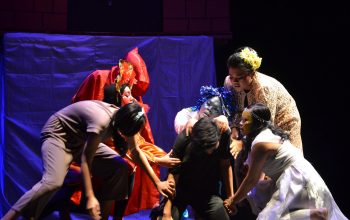
Our production of Richard Wright’s classic novel Black Boy, one of the best-known in our Literature to Life® series of great American literature brought to the stage, was to be performed for 1,600 students, 300 live and 1,300 via closed circuit TV into their classrooms. The pre-show would begin in a few short hours, and the leadership of the school had just announced to our teaching artist that the actor could not, under any circumstances, use the “n” word as contained in the script. "If he says it even once we will have the police remove him from the stage.”

My heart just stopped. Our Literature to Life Program prides itself on verbatim adaptations of selected text in order to provide new access to the author’s words and encourage deep personal connections to the material. How could a modern educational institution even consider removing any text whatsoever, let alone a word that is at the very center of the journey and moral significance of the story? My first response was absolutely, no. It is not my place, or my right, to alter the words of the author. That is sacred ground. I vowed long ago not to allow words and ideas to be removed from our texts and our lives. Sitting in my office, I immediately thought of Fahrenheit 451, by Ray Bradbury (a classic we have since selected for our 2009 Literature to Life Award). Over the span of 15 years, we have adapted more than twenty works
of great writers from Toni Morrison to Frank McCourt, Sandra Cisneros to Khaled Hosseini, but Ray Bradbury and that book have been a sort of a Holy Grail to us.

F-451 takes a very passionate and essential truth—that ideas are sacred and necessary—and sounds the alarm. The transformative power of both words and writers are at the heart of the work we do at The American Place Theatre. Words
are indeed sacred, but also precious and vulnerable. They are powerful and must be heard.

For young readers with 21st century approaches to learning, having Montag come to his monumental realizations in a
more visceral way, dramatically on a stage, is a consummation devoutly to be wished. To meet Captain Beatty in person and have him deliver his precise explanation of why it came to be that books, by necessity, be eliminated; to eavesdrop on
Montag and Professor Faber’s crazy scheme to save the world—these are experiences that will remain with you forever. They are neither the same as reading nor a substitute for that very private experience; rather, they are a communal engagement that activates the imagination in critical and profound ways.

So put yourself in my shoes in regards to Black Boy. What would you do? What would Richard Wright do? What would Ray Bradbury do? While an actor must “live truthfully under imaginary circumstances,” American Place remains resolutely aware that the environment in which we present our work is not the real world, but the school world. We are partners in a very delicate balance with the teacher, the school, and the student.

Putting yourself in the shoes of others is at the very essence of drama-in-education and the Literature to Life  methodology. It informs the surrounding activities of our in-classroom Residency workshops and our Professional Development activities. Adhering to that purpose, I investigated further and discovered the situation at the high school was more nuanced than it had at first appeared. The community had just experienced severe racial tensions that the school did not want to enflame. However, if I simply agreed to eliminate the “n” word, I would be denying the entire school the chance to see and hear all of the ideas and thoughts of Richard Wright as he battled racism and hatred in his own country.

We were ultimately left with a stark choice: either cancel the show and deprive the students of Wright’s work, or do the show without the offensive word. I asked to speak to my actor privately and, considering the circumstances, we decided we could not deny even one student the right to be inspired by Wright’s hunger for truth and equality. So we staged the play, albeit with a substitute word. I vowed that day to push harder, to make bolder our mission of “voices worth hearing.” We present this upcoming season of books to the stage, specifically Fahrenheit 451, in order to stoke the flame that is too easily extinguished. To learn how this and other great literature can be brought to life for you and your students, visit
www.americanplacetheatre.org or call 212-594-4482 x22.


“The stage is not merely the meeting place of all the arts,
but is also the return of art to life.”
—Oscar Wilde (1854–1900) Irish poet and dramatist


About the Writer
DAVID KENER’s long and multi-faceted association with The American Place Theatre began when he stud-
ied acting with APT’s Co-founder and Artistic Director, Wynn Handman. After performing in many of its
productions, David served as the Theatre’s Director of Education before becoming Executive Director in 2001.
He has brought APT’s Arts Education programs to national recognition through partnerships including the
Library of Congress in Washington, D.C., NYU’s Steinhardt School of Education, the Museum of Arts and
Design, and many others. Widely acclaimed for his innovative approaches to arts education, theatre-based literacy initiatives, and  building community coalitions, David Kener received his Bachelor of Arts Degree from New York University.racial tensions that the school did not want to enflame.
 

Recent News


Email Newsletter icon, E-mail Newsletter icon, Email List icon, E-mail List icon Sign up for our Email Newsletter
For Email Marketing you can trust